




Types of Debentures in India: Secured, Unsecured, and Convertible Options
Debentures are an important financial tool used by businesses to raise finance. These financial securities provide investors with a set return, making them an appealing option for individuals seeking consistent income. In India, debentures are classed according to their security, term, and convertibility. This article will discuss the many forms of debentures in India, including secured, unsecured, and convertible options.
What Are Debentures?
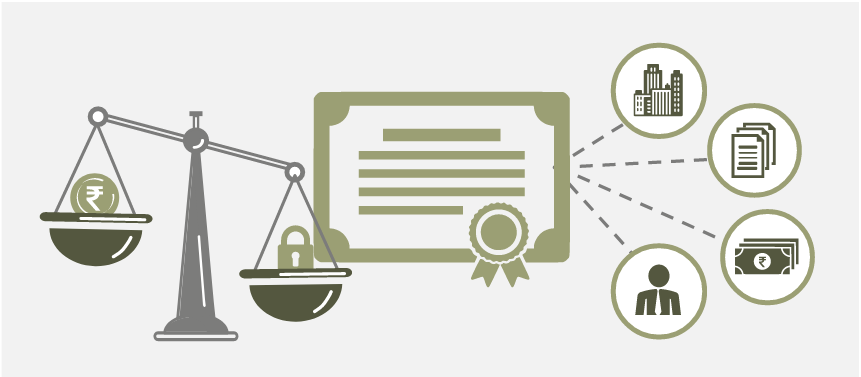
Debentures are long-term financial securities that allow a firm to borrow money from the public without providing any collateral. Unlike stock, debentures do not give investors ownership rights. Instead, they function as a loan from the investor to the company, with the guarantee of fixed interest payments over a certain term. At the end of the term, the principal amount is returned to the debenture holder.
Debentures are popular among businesses because they allow them to raise capital without diluting ownership. They are also preferred by investors seeking consistent income from interest payments.
Types of Debentures
Understanding the types of debentures is critical for both issuers and investors. Here are the types of debentures:
Secured Debentures
Secured debentures are the type of debentures that are supported by specified assets of the issuing corporation. In the event of a default, debenture holders have a claim to these assets, giving an additional layer of security. This decreases the risk for investors and frequently results in cheaper interest rates than unsecured debentures.
Characteristics of Secured Debentures
Asset-Backed: Secured debentures are backed by the company’s assets, such as property or equipment.
Unsecured Debentures
Unsecured debentures is one among the different types of debentures. It is commonly referred to as naked debentures, and has no collateral backing. These debentures are exclusively based on the issuer’s creditworthiness. As a result, they carry more risk but compensate investors with higher interest rates.
Characteristics of Unsecured Debentures
No Collateral: Unsecured debentures are not secured by any assets.
Convertible Debentures
Convertible debentures are the type of debentures that provide a distinct advantage by allowing investors to convert their debentures into equity shares of the issuing company after a certain time period. This option allows for capital appreciation in addition to fixed interest payments.
Characteristics of Convertible Debentures
Conversion Option: Investors can convert their debentures into equity shares.
Non-Convertible Debentures
Non-convertible debentures (NCDs) is one among the different types of debentures. They are straightforward debt instruments that do not permit conversion into equity. These debentures are preferred by investors who want fixed returns without the hassle of conversion.
Characteristics of Non-Convertible Debentures
No Conversion: NCDs cannot be converted to equity shares.
Redeemable Debentures
Redeemable debentures is one among the different types of debentures. They have a predetermined maturity date on which the principal amount is repaid to the holder. These debentures can be issued at par, premium, or discount and redeemed at the end of their tenure.
Characteristics of Redeemable Debentures
Fixed Maturity Date: Principal is repaid on a fixed date.
Irredeemable Debentures (Perpetual)
Irredeemable debentures is one among the different types of debentures. They are also called perpetual debentures, and do not have a set maturity date. These debentures pay interest in perpetuity and are only repaid if the issuing corporation goes out of business.
Characteristics of Irredeemable Debentures
No Fixed Maturity: These debentures will continue indefinitely.
Frequently Asked Questions
What are the key takeaways from this article?
Debentures are an important financial tool used by businesses to raise finance. These financial securities provide investors with a set return, making them an appealing option for individuals seeking consistent income. In India, debentures are classed according to their security, term, and convertibility. This article will discuss the many forms of debentures in India, including secured, unsecured, and convertible options.
Who should read this article?
This article is designed for retail investors, first-time bond buyers, and anyone looking to understand fixed income investments in India.
How does this relate to my investment portfolio?
Understanding these concepts helps you make informed decisions about asset allocation and build a diversified investment portfolio.