




What is a Tax-Saving FD?
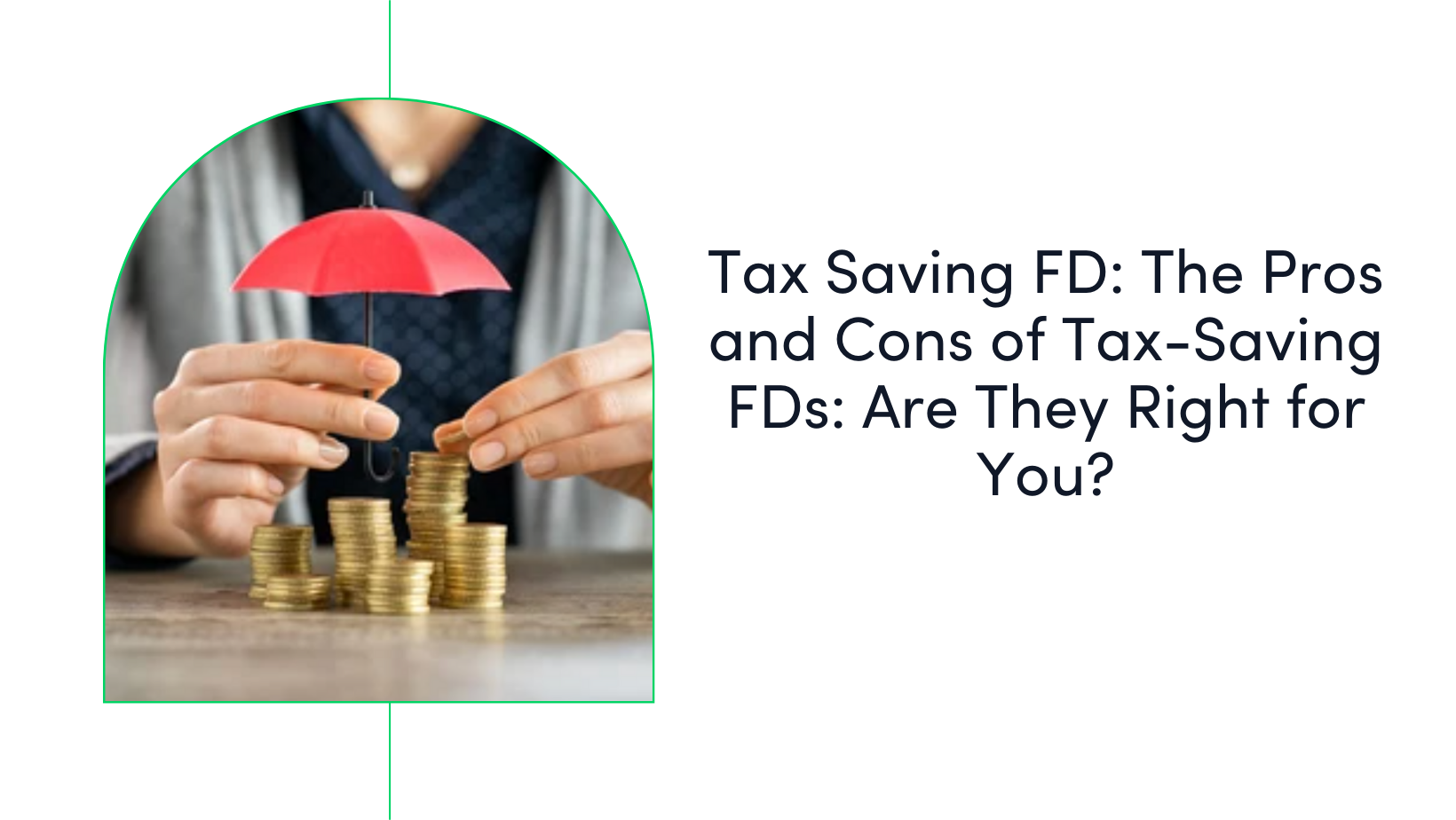
A Tax Saving FD is a fixed deposit scheme provided by banks and financial institutions in India that allows you to save taxes while earning fixed rates on your funds. Under Section 80C, the principal amount invested in a Tax Saving FD is deductible up to Rs. 1.5 lakh every fiscal year. These FDs have guaranteed returns that are unaffected by market changes, making them a safe and trustworthy investment alternative.
However, these FDs have a five-year lock-in term, which implies that the invested amount cannot be withdrawn before maturity. Furthermore, while the original amount is tax deductible, the interest collected is taxed based on your income bracket.
How Does Tax-Saving FD Work?
The method of investing in a Tax Savings FD is simple. This is how it works:
Choose a Bank or Financial Institution
The first step is to find a trustworthy bank or financial institution that offers tax-saving FDs. Before making a decision, make sure to evaluate the interest rates and amenities given by different organisations.
Investment Limits
The minimum investment is Rs. 100, with a maximum of Rs. 1.5 lakh per financial year.
Fixed Tenure
The Tax Savings FD requires a 5-year lock-in period. This implies you cannot make premature withdrawals, take out a loan, or use overdraft services against this deposit.
Interest Rates
Tax Saving FDs provide interest rates ranging from 5.5% to 7.75%, depending on the bank and the economic conditions at the time of investment. However, interest is taxable, and tax is deducted at the source (TDS) if it exceeds Rs. 40,000 per year for individuals (Rs. 50,000 for senior people).
Online Application
Many banks provide the ease of starting a Tax Saving FD online via their banking portals. After completing the Know Your Customer (KYC) process and sending the funds, you will receive a deposit confirmation, along with the interest rate and maturity date.
Banks offering Tax-Saving FD
Pros of Tax-Saving FDs
Frequently Asked Questions
What are the key takeaways from this article?
A Tax Saving FD is a fixed deposit scheme provided by banks and financial institutions in India that allows you to save taxes while earning fixed rates on your funds. Under Section 80C, the principal amount invested in a Tax Saving FD is deductible up to Rs. 1.5 lakh every fiscal year. These FDs have guaranteed returns that are unaffected by market changes, making them a safe and trustworthy investment alternative.
Who should read this article?
This article is designed for retail investors, first-time bond buyers, and anyone looking to understand fixed income investments in India.
How does this relate to my investment portfolio?
Understanding these concepts helps you make informed decisions about asset allocation and build a diversified investment portfolio.